
Electronic cigarettes, or vaping has become more well-known in recent years which has raised questions about their security and health. Vaping exposure from secondhand sources is a major problem, especially in enclosed spaces such as schools, homes and offices. A lot of people utilize vape detectors to combat this problem. They are able to detect and monitor vaping in indoor areas. In this article, we’ll explore the different types of vape detectors that are available in the market, their features, and the ways they can be used in various settings.
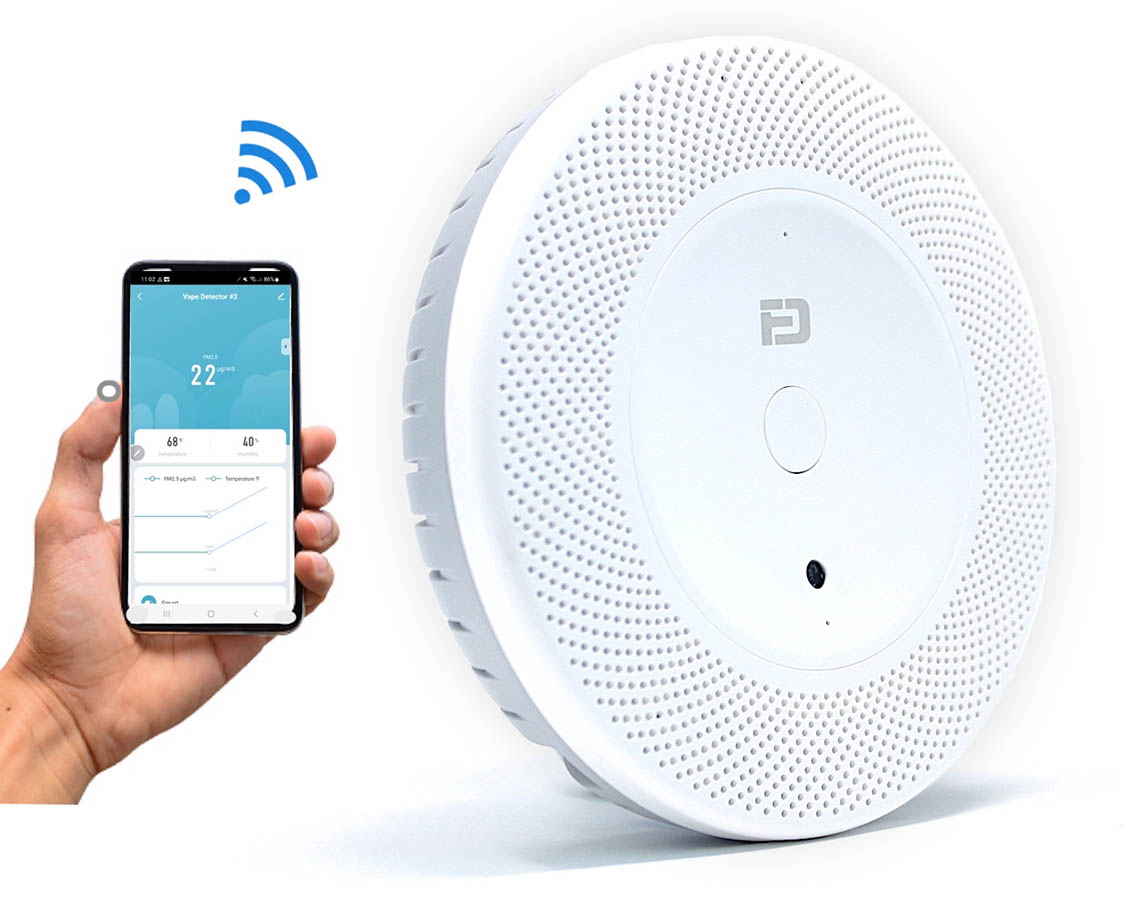
Vape detectors make use of sensors to detect vape particles and smoke in the air. They provide a precise assessment of the amount of indoor emissions. They help enforce smoking-free zones and determine that are populated by people who smoke. Vape detectors are available in various types that include those designed for use at the home, in schools as well as other public areas.
Vape detector for home use are becoming increasingly popular among families who want to protect their children from the harmful effects of secondhand smoke. They are usually small and discrete. They are suitable for use anywhere in the house where vaping might be prevalent, like bedrooms or living spaces. The detectors are able to be outfitted with a range of sensors, such as the PM2.5 sensor, which detects particles that are released from vape devices. A lot of home vape detectors include smartphone apps that can alert you when vaping is detected.
Schools are also a location where vape detectors have been utilized to address the issue of indoor smoking. Schools have adopted a smoking policy that prohibits the use of vaping devices. Vape detectors can help administrators enforce policies by identifying areas where students may be smoking. The devices are generally installed in public areas, such as bathrooms, hallways, and locker rooms. They are also connected to central monitoring systems that inform administrators whenever vaping has occurred or been detected.
They are more advanced than the ones specifically designed for use at home, as they cover a wider area and are able to differentiate between vaping (and other forms of smoke) and particles. The sensors are a combination comprising laser-scattering and other sensors that detect vaping. They can provide precise readings. Certain models are able to distinguish among different vaping devices such as e cigarettes and vaping pen.
Alongside schools and at home vape detectors are being used in other public spaces, such as casinos, hotels and workplaces. They are designed to provide a secure and healthy working environment for guests and employees by monitoring the quality of indoor air and finding the use of vape. They can be set up in common areas such as lobby areas, conference rooms or break rooms. They can provide real-time data on indoor air quality.
Vape detectors that use laser scattering to identify vaping particles are a crucial characteristic. This technology is capable of detecting tiny amounts of vape smoke. It works by shining a laser beam through the air to find any particles. Vape detectors can provide extremely precise measurements of indoor air quality and identify areas where vaping is occurring.
Vape detectors that are suitable for use in the home come with an additional feature: they can be connected to apps for smartphones which provide notifications and alerts in real-time whenever vaping is detected. This feature is beneficial to parents looking to monitor their children’s smoking habits at home as well as school administrators that want to know how often students are vaping. Certain vape detectors are also equipped with cloud-based data storage, which is useful for monitoring the quality of indoor air and identifying areas that might need additional focus.
Vape detectors provide an easy method of detecting indoor smoking at home, in schools, or other public areas. They use a variety of techniques and sensors to provide precise information on indoor air quality. They are also linked to smartphone apps for real-time notifications.
Vape detectors safeguard those who are in the vicinity of air pollution. They reduce distractions so that we can concentrate on monitoring and maintaining the purest possible air quality. Although the technology is relatively new, its effects remain to be thoroughly researched and there is a strong belief that these detectors could improve the indoor air quality as well as overall health. Vape detector technology has shown to be very efficient in the capture of harmful substances like carbon monoxide, ultrafine-particulate material (PM2.5), and volatile organic compounds. It’s now easier to detect products that are vaping with greater quality than before. Ultimately, vape detectors represent an exciting development in terms of security and health. As this new technology continues to increase in popularity, it might eventually help us to protect our families from the risk from secondhand smoke or vaping in our houses.